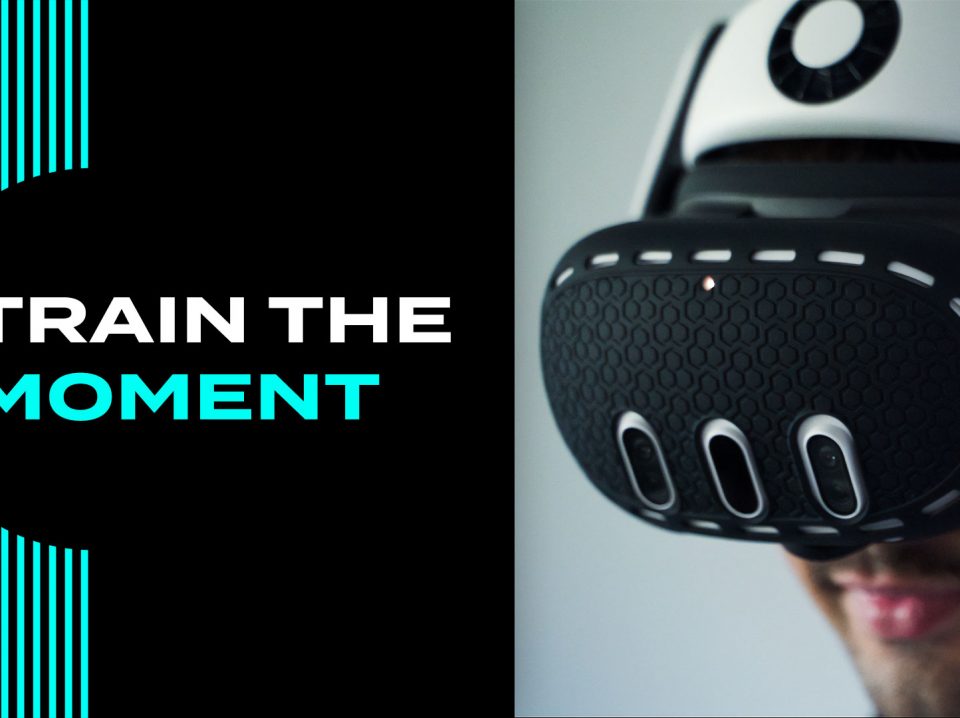
VR leadership training works because leadership is a practice skill, not a knowledge skill. Reading about difficult conversations doesn’t prepare you for them. VR creates realistic pressure, lets you fail safely, and provides immediate feedback on your actual behaviour, not what you think you’d do, but what you actually do when it matters. Research shows VR learners are 275% more confident applying skills than classroom-trained peers.
VR Leadership Training: Why Leaders Need Practice, Not Lectures
Here’s an uncomfortable truth about leadership development: most of it doesn’t work.
Organisations spend billions annually on leadership training. Executives attend workshops, complete assessments, read case studies, and sit through lectures on emotional intelligence, difficult conversations, and strategic thinking.
Then they return to work. And when the pressure hits such as a team member in crisis, a client threatening to leave, a decision that needs to be made with incomplete information, they react the same way they always have.
The problem isn’t the content. The problem is the method.
The Gap Between Knowing and Doing
Leadership is not a knowledge problem. It’s a practice problem.
Every leader knows they should stay calm under pressure. They know they should listen before responding. They know they should address conflict directly rather than avoiding it.
Knowing doesn’t help when your heart rate spikes, your mind races, and you default to the patterns you’ve repeated for years.
This is the knowing-doing gap. And traditional leadership training doesn’t close it because traditional training focuses on knowledge transfer, not skill development.
Consider the difference:
Knowledge: “Active listening involves reflecting back what you’ve heard to ensure understanding.”
Skill: Actually doing it when an employee is emotional, you’re running late for another meeting, and you disagree with what they’re saying.
The first can be learned in five minutes. The second requires practice, lots of it, under realistic conditions, with feedback on what you actually did versus what you intended to do.
Why Classroom Training Falls Short
Traditional leadership training has three fundamental limitations:
1. No realistic pressure
Role-plays with colleagues don’t create real stakes. Everyone knows it’s pretend. Your brain doesn’t activate the same stress responses, which means you don’t practice managing those responses.
When research participants are asked how they’d respond to a difficult scenario, their answers differ dramatically from their actual behaviour when placed in that scenario. We’re all better leaders in our imagination.
2. No privacy to fail
Learning requires failure. But failing in front of peers, especially as a senior leader, triggers ego protection, not learning. People play it safe, perform rather than practice, and avoid the vulnerability that real development requires.
3. No repetition
You wouldn’t expect someone to learn golf from a single lesson. Yet we send leaders to a two-day workshop and expect transformed behaviour. Skill development requires repetition: trying, failing, adjusting, trying again.
Most leaders get one or two attempts at a difficult conversation before they’re doing it for real. That’s not enough practice to build new patterns.
What VR Changes
VR leadership training addresses each of these limitations directly.
Realistic pressure without real consequences
VR creates presence, the psychological feeling of genuinely being in a situation. Your brain responds to a VR confrontation similarly to a real one: elevated heart rate, stress hormones, emotional activation.
This means you practice managing your actual reactions, not your imagined ones. You discover what you really do when someone pushes back, gets emotional, or challenges your authority.
But there are no real consequences. The angry employee won’t actually quit. The client won’t actually leave. You can take risks, try different approaches, and learn from mistakes without damaging relationships or outcomes.
Complete privacy
In VR, you practice alone. No colleagues watching. No judgment. No performance pressure beyond the scenario itself.
This privacy creates psychological safety for genuine practice. Leaders can be vulnerable, make mistakes, try approaches they’d never risk in front of peers, and develop skills without protecting their image.
Unlimited repetition
VR scenarios can be repeated instantly. Didn’t handle that conversation well? Try again. Want to test a different approach? Reset and go.
This repetition is what builds new neural pathways. Not understanding a concept intellectually, but practicing it until it becomes instinctive.
How AI Makes It Work
VR environments alone aren’t enough. A static scenario with scripted responses gets predictable quickly. Real leadership challenges are dynamic—people respond differently based on your approach.
This is where AI-powered characters transform VR training.
AI characters in modern VR training:
- Listen to what you actually say, not just recognise keywords
- Respond dynamically based on your tone, word choice, and approach
- Remember context from earlier in the conversation
- Escalate or de-escalate based on how you handle the situation
- Display emotional responses through voice tone and facial expressions
This means every practice session is different. You can’t memorise the “right” answers. You have to actually develop the skill.
After each session, AI provides feedback on your actual behaviour: Were you listening or waiting to talk? Did you acknowledge their concern before problem-solving? How did your response affect their emotional state?
This feedback closes the loop between intention and impact—often revealing gaps leaders weren’t aware of.
What Leaders Practice in VR
VR leadership training is particularly effective for skills that require emotional regulation and interpersonal nuance:
Difficult conversations
Delivering critical feedback. Addressing underperformance. Discussing sensitive personal issues. These conversations are uncomfortable, which is why most leaders avoid or mishandle them. VR lets you practice until discomfort becomes manageable.
Crisis communication
When pressure is high and information is incomplete, leaders default to instinct. VR creates that pressure safely, letting you practice staying calm, communicating clearly, and making decisions when it matters.
Active listening
Most leaders overestimate their listening skills. VR with AI feedback reveals the gap between perception and reality showing exactly when you interrupted, dismissed, or moved to solutions before understanding the problem.
Conflict resolution
Mediating between team members. Addressing tension directly. Navigating disagreement without damaging relationships. These skills require practice in emotionally charged situations. Exactly what VR provides.
Stakeholder management
Managing up, managing across, managing demanding clients. Each requires reading situations, adapting communication styles, and maintaining composure when others are difficult.
The Research Behind It
This isn’t theoretical. Research consistently shows VR’s effectiveness for skills that require emotional engagement and behavioural practice.
PwC’s 2020 study on VR soft skills training found:
- VR learners trained 4x faster than classroom learners
- VR learners were 275% more confident to apply skills after training
- VR learners were 4x more focused than e-learning participants
- VR learners felt 3.75x more emotionally connected to the content
The confidence finding is particularly relevant for leadership. Knowing what to do isn’t enough. Leaders need confidence to actually do it when it’s uncomfortable.
Research on VR and authentic behaviour shows that the presence created by VR enables more genuine responses than traditional role-play. When the environment feels real, practice becomes real practice, not performance.
What VR Leadership Training Looks Like
A typical VR leadership training session:
1. Brief context (2 minutes)
You receive background on the scenario: who you’re meeting with, what’s happened, what’s at stake. Enough to understand the situation, not so much that you’re reading a script.
2. Live scenario (5-15 minutes)
You enter the VR environment and have the conversation. The AI character responds to you naturally. The scenario unfolds based on your choices.
3. AI feedback (3-5 minutes)
Immediate analysis of your approach: what worked, what didn’t, specific moments to revisit. Metrics on listening, empathy cues, assertiveness, and other relevant dimensions.
4. Reflection and retry (optional)
Process what you learned. Then do it again with a different approach. See how different choices lead to different outcomes.
5. Progress tracking (ongoing)
Over multiple sessions, dashboards show skill development: Are you improving at staying calm? Is your listening score increasing? Are you addressing issues more directly?
The entire cycle takes 15-30 minutes. Easy to fit into a workday, unlike multi-day offsite programmes.
When VR Leadership Training Makes Sense
VR isn’t the right solution for every leadership development need. It’s most valuable when:
The skill requires practice under pressure
If leaders need to manage their reactions, regulate emotions, or perform when stakes feel high, VR’s ability to create presence makes practice meaningful.
Privacy matters
Senior leaders often resist development activities that expose weakness. VR’s privacy removes this barrier.
Repetition is important
Skills that require building new habits benefit from VR’s unlimited practice. One workshop won’t change ingrained patterns; repeated practice can.
Feedback gaps exist
Leaders rarely get honest feedback on their interpersonal behaviour. AI provides objective analysis without political complications.
Scale is needed
For organisations developing leadership capability across many people, VR scales more efficiently than executive coaching or facilitated workshops.
Getting Started
If you’re considering VR for leadership development, start with these questions:
What specific skills need development?
“Leadership” is too broad. Identify the specific behaviours: difficult conversations, active listening, crisis communication, conflict resolution. VR works best with defined skills that can be practiced in realistic scenarios.
Where are current methods falling short?
If classroom training were working, you wouldn’t be exploring alternatives. Identify the gaps: Is it lack of practice? Lack of realistic pressure? Lack of feedback? This clarifies what VR needs to solve.
How will you measure success?
VR provides data traditional training doesn’t: practice frequency, skill scores, improvement over time. Decide upfront how you’ll evaluate whether it’s working.
Who will champion it?
New approaches need internal advocates. Identify leaders willing to try VR themselves and share their experience. Peer endorsement matters more than vendor claims.
The Bottom Line
Leadership is a practice skill. You don’t get better by learning about it, you get better by doing it, repeatedly, with feedback, under realistic conditions.
Traditional training struggles to provide this. VR makes it possible.
Not because the technology is impressive, but because it creates the conditions that skill development requires: realistic pressure, safe failure, unlimited repetition, and immediate feedback.
The leaders who improve fastest aren’t those with the most knowledge. They’re those with the most practice.
VR leadership training is how you get that practice.
Experience VR Leadership Training
At Many Worlds, we build AI-powered VR simulations for leadership development: difficult conversations, crisis communication, active listening, and high-pressure decision-making.
Watch our demo to see AI characters in action, or get in touch to discuss how VR could support your leadership development goals.
Frequently Asked Questions
What is VR leadership training?VR leadership training uses virtual reality and AI-powered characters to let leaders practise difficult skills—conversations, crisis communication, conflict resolution—in realistic scenarios without real-world consequences. Leaders get immediate feedback on their actual behaviour, not just what they think they’d do.Does VR leadership training actually work? Yes. PwC research found VR learners were 275% more confident applying skills than classroom-trained peers, trained 4x faster, and were 4x more focused. VR creates presence—the psychological feeling of being there—which makes practice feel real and helps skills transfer to actual situations.
What leadership skills can be trained in VR? VR is particularly effective for skills requiring emotional regulation: difficult conversations, delivering feedback, crisis communication, active listening, conflict resolution, and stakeholder management. These require practice under pressure, which VR provides safely.
How is VR leadership training different from traditional training? Traditional training transfers knowledge; VR develops skills through practice. Classroom role-plays lack realistic pressure and privacy. VR creates genuine stress responses, complete privacy to fail, unlimited repetition, and AI feedback on actual behaviour—conditions traditional methods can’t replicate.
How long does a VR leadership training session take? A typical session takes 15-30 minutes: brief context, live scenario with AI character, immediate feedback, and optional retry. This fits into a workday unlike multi-day workshops, and can be repeated for ongoing skill development.