

VR Simulation Training: What’s Actually Possible?
When it comes to virtual reality, the possibilities are almost endless. But what can you actually create within a virtual training environment? What’s realistic to expect, and what’s still science fiction?
For organisations exploring VR simulation training, understanding what’s technically possible helps set realistic expectations—and often reveals capabilities that exceed what most people imagine.
Here are some powerful, practical examples of the kinds of experiences that VR can bring to life for training and professional development.
1. Immersive environments and realistic settings
One of VR’s strongest capabilities is transporting users to places that might otherwise be out of reach—whether due to budget, physical limitations, safety concerns, or simple logistics.
For training purposes, this means you can place learners in:
- Realistic office environments for practicing difficult workplace conversations
- High-pressure settings like boardrooms, press conferences, or client meetings
- Dangerous or inaccessible locations for safety training without actual risk
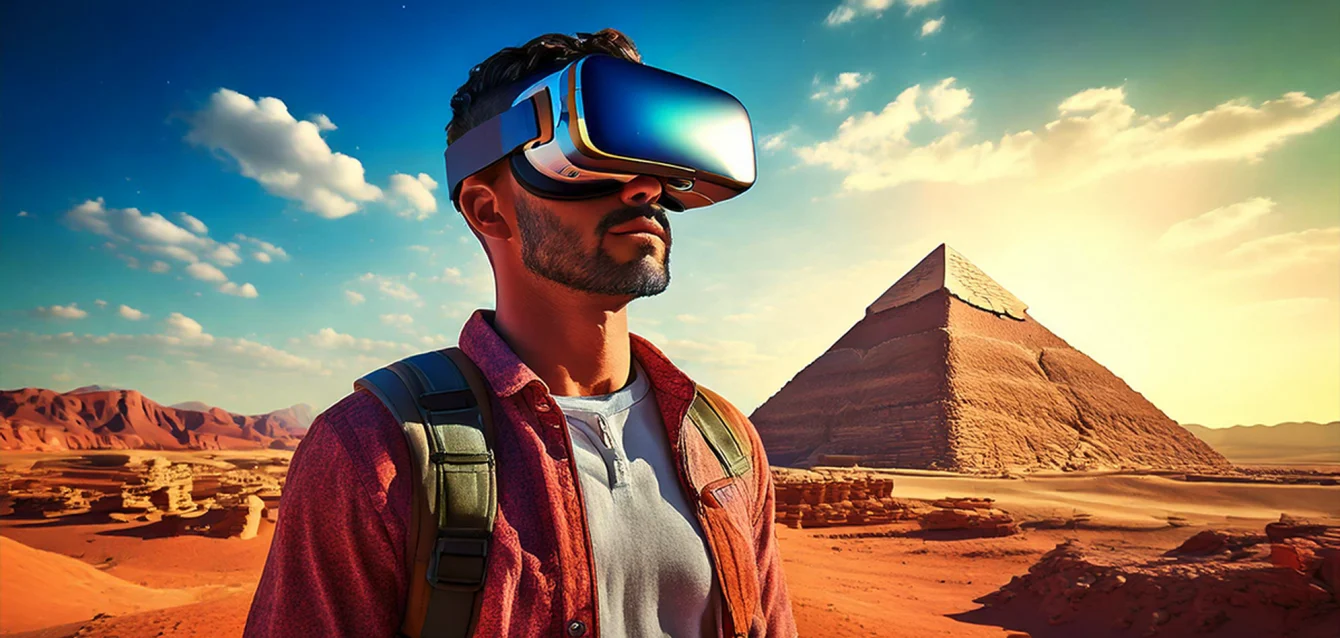
- Historic or iconic locations for context-rich learning experiences
- Custom-branded environments that match your organisation’s actual spaces
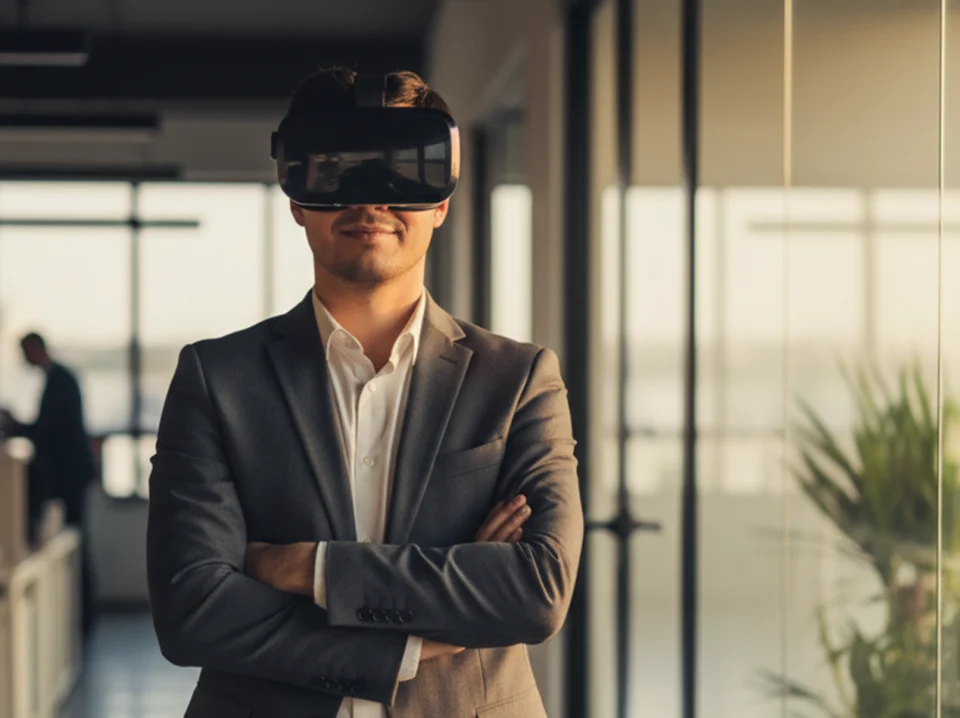
Imagine standing in a realistic simulation of your company’s boardroom, preparing to deliver a presentation to a demanding executive team. Or practicing a crisis communication scenario in a press conference setting with journalists firing questions at you.
VR can bring you right there, offering a sense of presence that goes beyond a simple video or e-learning module. The environment becomes part of the learning—creating context, pressure, and emotional engagement that flat-screen training simply cannot match.
2. Realistic human simulations
Perhaps the most fascinating possibility within virtual environments is the ability to simulate realistic humans—complete with facial expressions, voice, body language, and emotional responses.
With today’s advanced 3D modelling and AI-powered animation, it’s possible to create detailed, lifelike characters that learners can interact with naturally. These aren’t static avatars reading scripted lines. They’re dynamic characters powered by AI that listen, understand context, and respond like real people.
What’s possible today:
- Photorealistic human models created from reference images
- Natural facial expressions that convey emotion and respond to the conversation
- Voice interaction where characters respond to what you actually say
- Body language and gestures that match emotional states
- Personality and backstory that creates consistent, believable behaviour
Beyond just appearance, adding elements like voice recordings, facial expressions, and animations brings these digital characters to life. They can speak, move, and react as if they were right in front of you.
Imagine practicing a difficult conversation with a frustrated employee, seeing their expressions change based on your approach, hearing their voice shift from defensive to open as you demonstrate effective listening skills:
For soft skills training—leadership, communication, conflict resolution, active listening—this capability is transformative. Learners can practice with characters that feel real, in scenarios that create genuine emotional responses.
3. Interactive objects and environments
Virtual environments also allow us to create realistic, interactive objects. Learners can reach out to pick up, move, or interact with items in the virtual space.
Extensive libraries of 3D models enable almost any item to be added to a virtual environment, with lifelike textures and realistic responses to interaction. This gives learners a heightened sense of presence and agency.
Training applications include:
- Document handling for scenarios involving contracts, reports, or sensitive materials
- Equipment interaction for technical or safety training
- Environmental controls like phones, computers, or presentation equipment
- Props and context items that make scenarios feel authentic
The interactivity matters because it deepens immersion. When learners can manipulate their environment—pick up a phone, hand over a document, gesture toward a screen—they engage more fully with the scenario.
4. Dynamic scenarios that respond to learner behaviour
Perhaps most importantly for training, VR simulations can be designed to respond dynamically to what learners do and say.
This isn’t pre-recorded video with branching paths. It’s AI-powered interaction where:
- Characters respond to your actual words, not just button selections
- Emotional states shift based on your approach
- Scenarios escalate or de-escalate depending on your behaviour
- Consequences feel real—a poorly handled conversation can result in a character walking away or the scenario failing
This dynamic responsiveness is what transforms VR from a viewing experience into a practice environment. Learners don’t just watch how a conversation should go—they experience what happens when they get it right, and what happens when they get it wrong.
The only limits are imagination and ambition
The continuous advancements in technology and AI are making it easier than ever to achieve authentic, immersive training experiences. What required massive budgets and Hollywood-level production five years ago is now accessible to organisations of all sizes.
More time and effort can add layers of realism, but even relatively simple simulations—when well-designed—can create powerful learning experiences. The key is focusing on presence and emotional engagement, not just visual fidelity.
In the world of VR simulation training, if you can imagine the scenario, you can likely create it. The question isn’t “is this technically possible?” but rather “what training challenges would benefit most from immersive practice?”
What Many Worlds creates
At Many Worlds, we specialise in creating immersive training simulations that combine all of these elements:
- Realistic environments tailored to your training context
- AI-powered human characters that respond naturally to learners
- Interactive scenarios that create genuine consequences
- Analytics and feedback that measure skill development
Whether you need a crisis communication simulation, a leadership conversation trainer, or an active listening practice environment, we build experiences that feel real—because that’s when real learning happens.
See what’s possible
The best way to understand VR simulation training is to experience it yourself.
Watch our demos to see realistic AI characters in action, or get in touch to discuss what simulations could support your organisation’s training goals.
Frequently Asked Questions
What can you simulate in VR training? Modern VR can simulate virtually any environment—offices, boardrooms, factory floors, crisis scenarios, client meetings—with realistic lighting, spatial audio, and interactive objects. More importantly, AI-powered characters can populate these environments, responding naturally to what learners say and creating dynamic, unscripted conversations.
How realistic are VR training simulations? Visual realism has improved dramatically, but for soft skills training, conversational realism matters more. Today’s AI characters can understand context, remember earlier parts of a conversation, display appropriate emotional responses, and adapt their behaviour based on how you interact with them. This creates psychological presence—the feeling that the interaction is real—even if the graphics aren’t photorealistic.
Can VR simulate real people? Yes. AI characters can be designed with specific personalities, backstories, communication styles, and emotional states. They can be modelled on realistic human appearances using photogrammetry or stylised for specific training contexts. What makes them feel “real” is their conversational behaviour, not just their appearance.
What’s the difference between 360 video and VR simulation? 360 video captures real footage that users can look around in, but offers no interactivity—you’re a passive observer. VR simulation creates computer-generated environments where users can move, interact with objects, and have conversations with AI characters. For skills that require practice and feedback, simulation is far more effective.
How long does it take to build a custom VR simulation? Simple scenario modifications can take days. Fully custom environments with new AI characters typically take 4–12 weeks depending on complexity. Many Worlds offers both off-the-shelf simulations and custom development for organisations with specific training needs.