

VR Training Cost: Tethered vs Standalone VR
Many organisations exploring VR training get scared off before they start. They see enterprise systems costing R50,000+ per station and assume all VR is prohibitively expensive.
The reality is dramatically different.
Standalone VR has matured to the point where soft skills training, safety programmes, and scalable corporate deployments can launch for under R8,000 per user. The confusion stems from conflating two very different categories of VR hardware: tethered systems that require expensive PCs, and standalone headsets that work straight out of the box.
This guide breaks down exactly what each approach costs, when each makes sense, and how to plan a practical deployment for your organisation.
Understanding the two VR categories
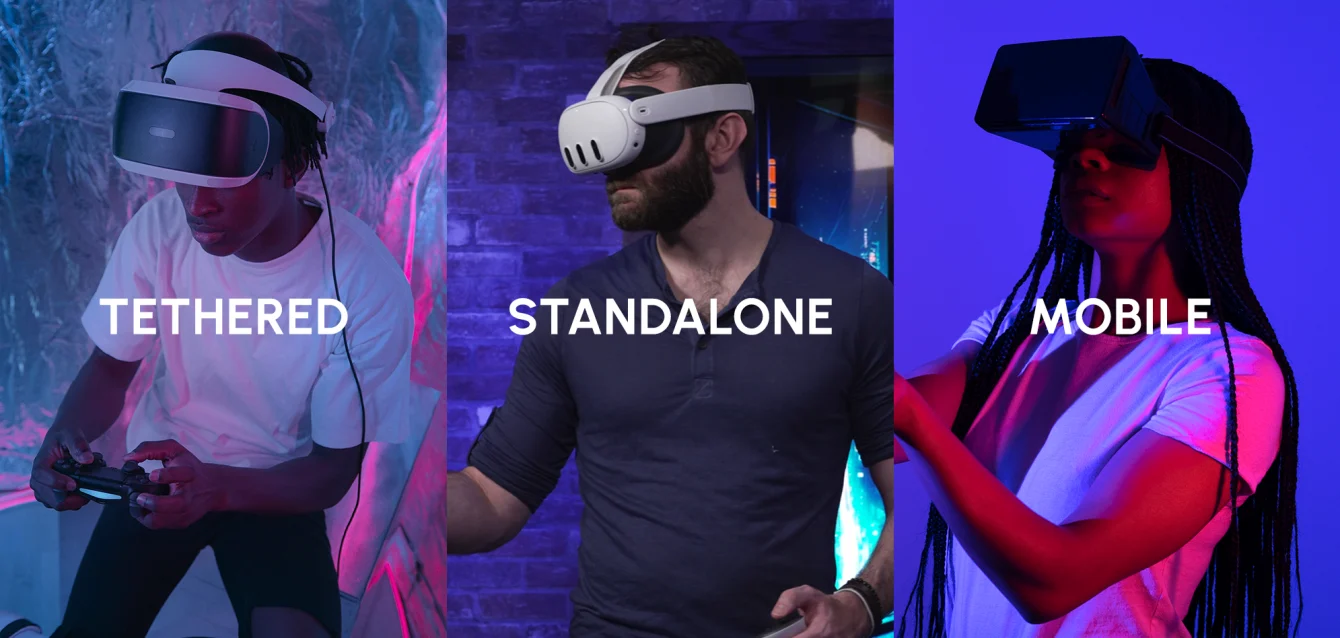
Tethered VR headsets connect to a high-powered gaming PC via cables. The headset is primarily a display. All the heavy computational work happens on the desktop. This means you need both an expensive headset (R8,000–R65,000) and a VR-capable PC (R15,000–R60,000), plus base stations, cables, and dedicated space. Systems like the HTC Vive Pro 2, Valve Index, and Varjo represent this category.
Standalone VR headsets are self-contained computers you wear on your face. Everything (processor, display, tracking cameras, storage, and battery) lives inside the device. No PC, no cables, no external sensors. You charge it, put it on, and start training. The Meta Quest 3, Quest 3S, and Pico 4 exemplify this approach.
The trade-off is lower graphical fidelity compared to a desktop GPU. But for most training applications such as soft skills, communication, safety, and onboarding, standalone devices deliver more than sufficient quality.
Current standalone headset pricing (2024-2025)
The standalone market is dominated by Meta’s Quest lineup, with alternatives from Pico and HTC for enterprise buyers seeking different ecosystems.
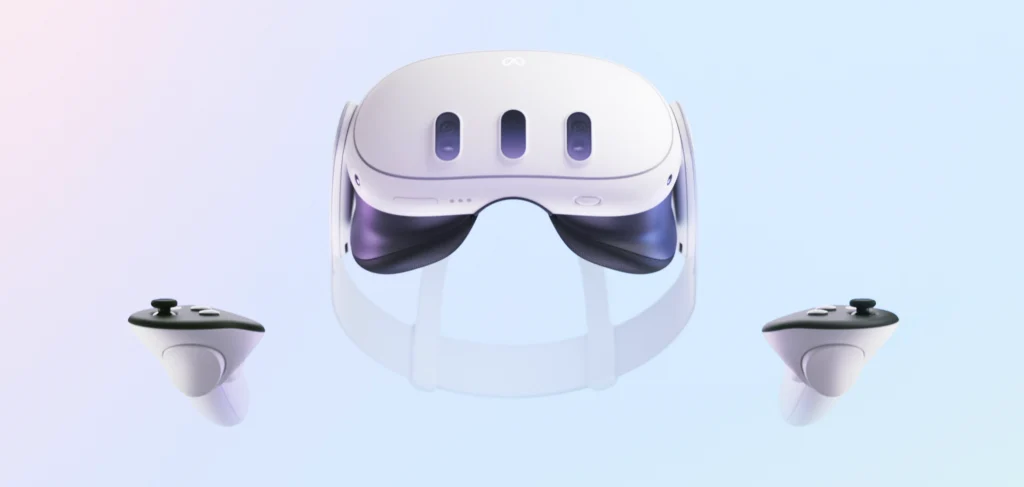
Meta Quest 3S — R6,900–R12,000 (South Africa) Launched October 2024, this is the new entry point for serious VR training. It uses the same Snapdragon XR2 Gen 2 processor as the flagship Quest 3, delivering identical performance in a more affordable package. For soft skills training, onboarding, and safety simulations, the visual differences from more expensive headsets are imperceptible to most users.
Meta Quest 3 — R11,880–R16,000 (South Africa) The premium standalone experience with sharper visuals, wider field of view, and superior mixed reality passthrough. The 512GB storage version accommodates larger training libraries.
Pico 4 Ultra Enterprise — ~R12,500 Offers eye and face tracking with the same XR2 Gen 2 chip. A viable alternative for organisations wanting to avoid the Meta ecosystem.
HTC Vive Focus 3 — ~R23,000 Provides 5K resolution and hot-swappable batteries—useful for continuous multi-shift training operations.
What tethered PC VR actually costs
The sticker price of a tethered headset tells only part of the story. A complete PC VR training station requires multiple components.
Valve Index Full Kit — ~R18,000 Includes headset, controllers, and base stations, but requires a VR-ready PC costing R15,000–R35,000. A mid-range configuration with an RTX 4070 graphics card runs approximately R25,000.
HTC Vive Pro 2 Full Kit — ~R25,000 Similar economics: headset plus the PC infrastructure to run it.
Varjo XR-4 — ~R72,000 (headset only) Enterprise licenses add R54,000–R90,000 annually. A complete Varjo workstation with appropriate GPU, base stations, and controllers runs R270,000–R380,000. These systems deliver roughly twice the visual clarity of consumer headsets, appropriate for surgical simulation or aerospace training where visual fidelity directly impacts outcomes.
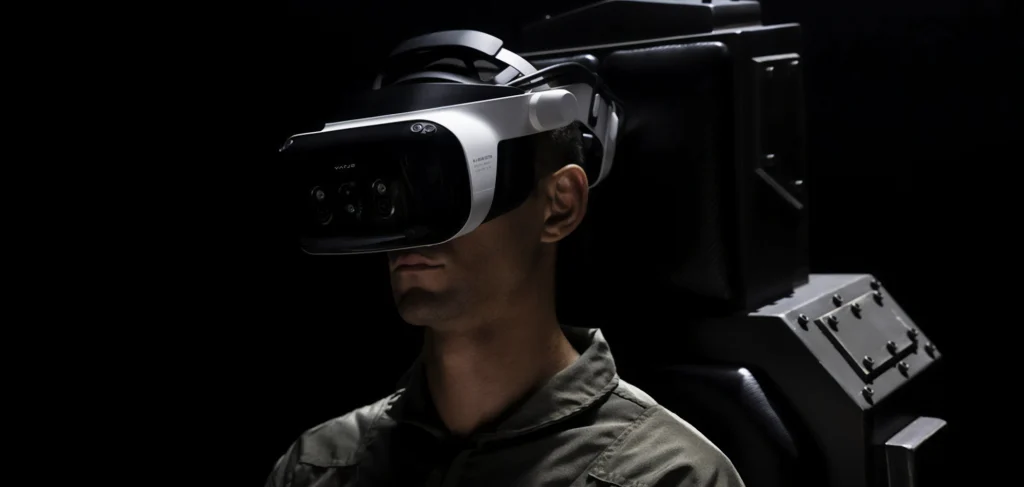
Total cost per tethered station: R40,000–R80,000 minimum for a functional training setup. Premium configurations exceed R400,000.
Side-by-side cost comparison at scale
The financial case for standalone VR becomes overwhelming when deploying to multiple users.
| Deployment Size | Standalone (Quest 3S) | Tethered (Index + PC) |
|---|---|---|
| 10 users | R70,000–R120,000 | R400,000–R600,000 |
| 50 users | R350,000–R600,000 | R2–2.75 million |
| 100 users | R700,000–R1.2 million | R4–5.5 million |
That’s a 5-6x cost difference before considering the additional IT support, dedicated space, and ongoing maintenance that tethered systems demand.
Beyond hardware, standalone deployments require minimal IT infrastructure. Essentially WiFi connectivity and a device management subscription. Tethered deployments need dedicated VR rooms, permanent base station installations, regular PC maintenance, GPU driver management, and trained IT staff for troubleshooting.
Hidden costs to budget for
Enterprise VR deployments carry expenses beyond hardware that planning teams frequently underestimate.
Device management software Essential for any deployment beyond a handful of units. Platforms like ArborXR and ManageXR charge R160–R500 per device monthly. Meta’s Quest for Business subscription runs approximately R250–R400 per headset per month.
Content and software licensing Off-the-shelf training modules run R80,000–R350,000. Custom VR training development for mid-complexity scenarios costs R900,000–R2.7 million. Many platforms charge per-user subscription fees of R500–R4,500 monthly.
Hygiene supplies For shared-device deployments: replacement face cushions (R400–R700 each), disposable VR masks (R5–R15 each), sanitising equipment. Budget R2,000–R5,000 annually per high-use device.
Replacement cycles Plan for 3-year headset refresh. Controllers may need replacement sooner due to physical wear. Budget 10-15% annual attrition in high-volume deployments.
When tethered VR justifies the investment
Despite the cost advantages of standalone, tethered PC VR remains appropriate for specific scenarios where visual fidelity or processing power directly determines training effectiveness.
Medical and surgical simulation When procedures require sub-millimetre precision tracking or photorealistic tissue rendering. Trainees need to read fine instrument markings and observe subtle anatomical details.
Complex engineering visualisation CAD models, architectural walkthroughs with real-time lighting, or digital twins of industrial facilities that exceed standalone processing capabilities.
Extended sessions exceeding 2-3 hours Tethered systems draw power from the wall rather than batteries, simplifying continuous multi-hour training programmes.
Existing PC VR content investments Organisations with extensive SteamVR training libraries should calculate whether porting to standalone costs more than maintaining PC infrastructure.
That said, Quest headsets offer hybrid flexibility through Quest Link (wired) and Air Link (wireless) connections to VR-ready PCs. Organisations can deploy Quest devices for standalone training while maintaining the option to connect to PCs for high-fidelity scenarios when needed.
The market has decisively shifted toward standalone
Industry data confirms what the economics suggest. Meta captured 74.6% of the global VR/AR headset market in 2024, reaching 84% in Q4 following the Quest 3S launch. This dominance reflects enterprise adoption patterns. Organisations overwhelmingly choose standalone for training deployments.
Major enterprise deployments demonstrate this shift:
- Walmart deployed 17,000 standalone headsets across 4,700 stores, achieving 96% reduction in training time for certain modules
- Accenture acquired 60,000 Quest 2 headsets for employee training
- Bank of America deployed VR training to 4,300 financial centres
PwC’s landmark study found VR trainees completed content 4x faster than classroom learners and were 275% more confident applying learned skills. Their cost analysis determined VR becomes 52% cheaper than classroom training at 3,000 learners.
South African pricing realities
South African VR buyers face a specific constraint: Meta does not officially operate in South Africa. All Quest headsets sold locally are parallel imports through specialist retailers. This creates price premiums and warranty limitations.
Current South African pricing:
- Quest 3S 128GB: R6,886–R12,000
- Quest 3 512GB: R11,880–R16,000
These premiums (40-65% over US pricing) reflect import duties, shipping, retailer margins, and exchange rate buffers.
Reliable South African retailers include Cybertrek, and 180by2. Warranty coverage depends entirely on the retailer, not Meta, most offer 6-12 months.
For enterprise deployments, budget R7,000–R12,000 per headset plus R1,500–R3,000 per unit for essential accessories (elite straps, carrying cases, hygiene supplies).
Practical deployment recommendations
For soft skills, communication, and leadership training at scale: Deploy Quest 3S headsets with device management subscription. Budget approximately R12,000–R15,000 per seat all-in for year one (headset, accessories, MDM, software).
For safety and compliance training across distributed locations: Standalone VR’s portability is decisive. A single headset can serve multiple sites, and facilitators require minimal technical expertise.
For pilot programmes and proof-of-concept: Start with 5-10 Quest 3S units (under R100,000 total) targeting a single high-impact training use case. Measure baseline metrics before deployment, track results consistently, and expand only after demonstrating value.
Battery and session planning
Quest 3 and 3S provide approximately 2–2.5 hours of active use per charge, with 2–2.5 hours required for full recharge. For training deployments:
- Multi-device charging stations are essential beyond a few units
- Elite Straps with integrated batteries add roughly 2 hours of runtime
- Plan session scheduling around charging cycles, or invest in multiple headsets for rotation
The cost barrier has fallen
The perception that VR training requires massive capital investment reflects outdated understanding of the technology landscape. A complete, enterprise-capable VR training station now costs less than a mid-range laptop, and delivers training effectiveness improvements that justify the investment within months.
For soft skills training, standalone VR at R7,000–R12,000 per headset eliminates the infrastructure barriers that previously limited VR to the largest enterprises. Organisations can start meaningful VR training programmes for under R100,000, scale incrementally as value is demonstrated, and achieve cost parity with traditional training methods at relatively modest learner volumes.
The question is no longer whether you can afford VR training, but whether you can afford to ignore the 4x faster completion times, 275% confidence improvements, and documented ROI that VR-trained teams deliver.
Ready to explore VR training for your organisation?
Many Worlds delivers AI-powered immersive training that works across VR headsets, desktop, and mobile—meeting organisations where they are, not where their hardware budget allows.
Watch our demos to see soft skills training in action, or get in touch to discuss what’s possible for your team.
All pricing referenced in this article is approximate and based on research conducted in January 2026. Prices fluctuate based on exchange rates, retailer margins, and product availability—verify current pricing with suppliers before making purchasing decisions. This article was written with research assistance from Claude AI.